

Food and Beverage Deliveries Are Undermining Pedestrian Safety and Climate Progress
Cities across the country are spending millions to make downtowns safer, greener, and more walkable. Bike lanes are added. Pedestrian plazas expand. Climate action plans multiply. Yet one daily operation still sits largely outside public control: food and beverage last-mile delivery to restaurants, bars, and hotels.
““When no single operator is responsible for food and beverage deliveries, no one is responsible for their impact on safety, congestion, or emissions. Active management is not optional, it is essential.””
In many downtowns and resort communities, food and beverage trucks circulate throughout the day. Multiple distributors serve the same block within the same morning. Large trucks idle on narrow streets. Bike lanes become loading zones. Sidewalk access disappears during peak hours. These deliveries are essential, but the way they are managed today creates unnecessary emissions, congestion, and safety risks.
We see this pattern repeatedly in dense, pedestrian-oriented districts where restaurants and hotels rely on frequent deliveries but streets were never designed for constant truck traffic. The problem is not volume alone. It is overlap.
This is not a problem caused by restaurant owners or drivers. It is a governance and coordination problem.
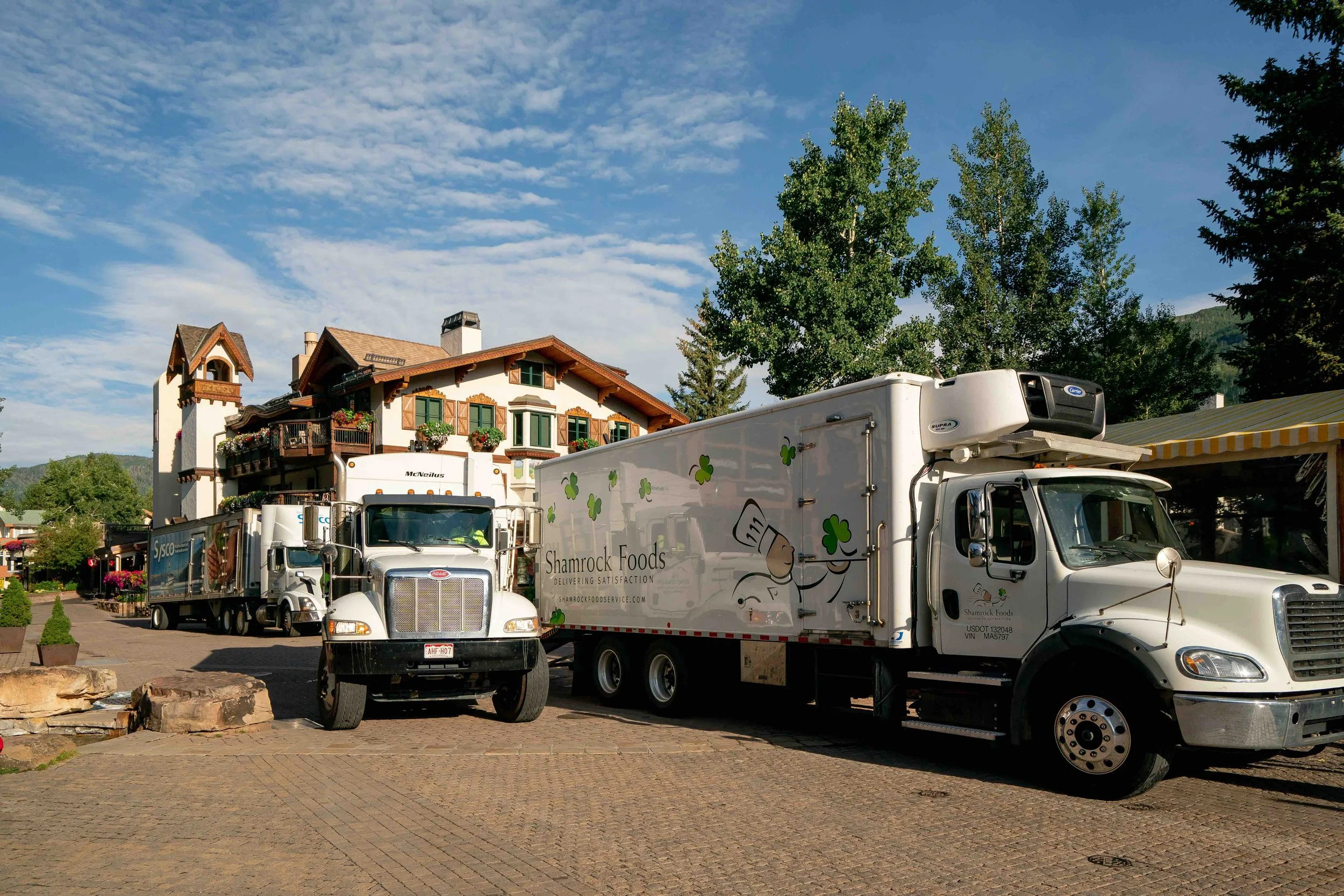
Food and beverage last-mile delivery has quietly become one of the least managed parts of the transportation system. Cities regulate transit, parking, noise, and land use, but largely leave deliveries to the private market, assuming competition will create efficiency. In practice, it creates redundancy. Each supplier runs its own routes, schedules, and vehicles, even when serving the same destinations. The result is overlapping delivery trips, excessive truck traffic, and limited ability for cities to enforce standards or measure impacts. More trucks. More miles. More emissions.
What is missing is accountability.
When no single operator is responsible for managing food and beverage deliveries, no one is responsible for their impact on safety, congestion, or emissions. Enforcement becomes reactive. Climate goals become abstract. Pedestrian-first street design is undermined by vehicles never intended to operate in those environments.
A more effective model already exists: managed consolidation and coordination.
By coordinating food and beverage deliveries under a single accountable operator, cities can reduce overlapping delivery trips, limit the number of trucks entering dense districts, and establish clear operating standards. This requires cities to actively manage food and beverage delivery rather than leaving it unmanaged, but the results are tangible. Streets become safer. Emissions decline. Restaurants, bars, and hotels continue to receive reliable service.
This is not a futuristic technology play. It is not about drones or marketing claims. It is about operational alignment between how cities want their streets to function and how essential commercial activity actually occurs.
If cities are serious about pedestrian safety and climate action, they cannot continue treating food and beverage deliveries as someone else’s problem. Climate plans that ignore daily delivery operations are incomplete by design.
