


Reducing Delivery Truck Congestion
With a coordinated, accountable last-mile delivery system designed for cities, resort towns, and commercial districts.
Last-Mile Delivery Programs for Municipalities That Reduce Downtown Truck Congestion
Cities, resort towns, and commercial districts face rising delivery volumes that create congested streets, curb conflicts, and growing pedestrian safety concerns in dense downtown districts. 106West implements municipal last-mile delivery programs that consolidate deliveries, reduce truck trips, improve curb management, and protect pedestrian environments within defined commercial cores.
Learn how 106West partners with municipalities to deliver measurable reductions in congestion, safer curb conditions, and more efficient downtown delivery operations.
How It Helps Municipalities
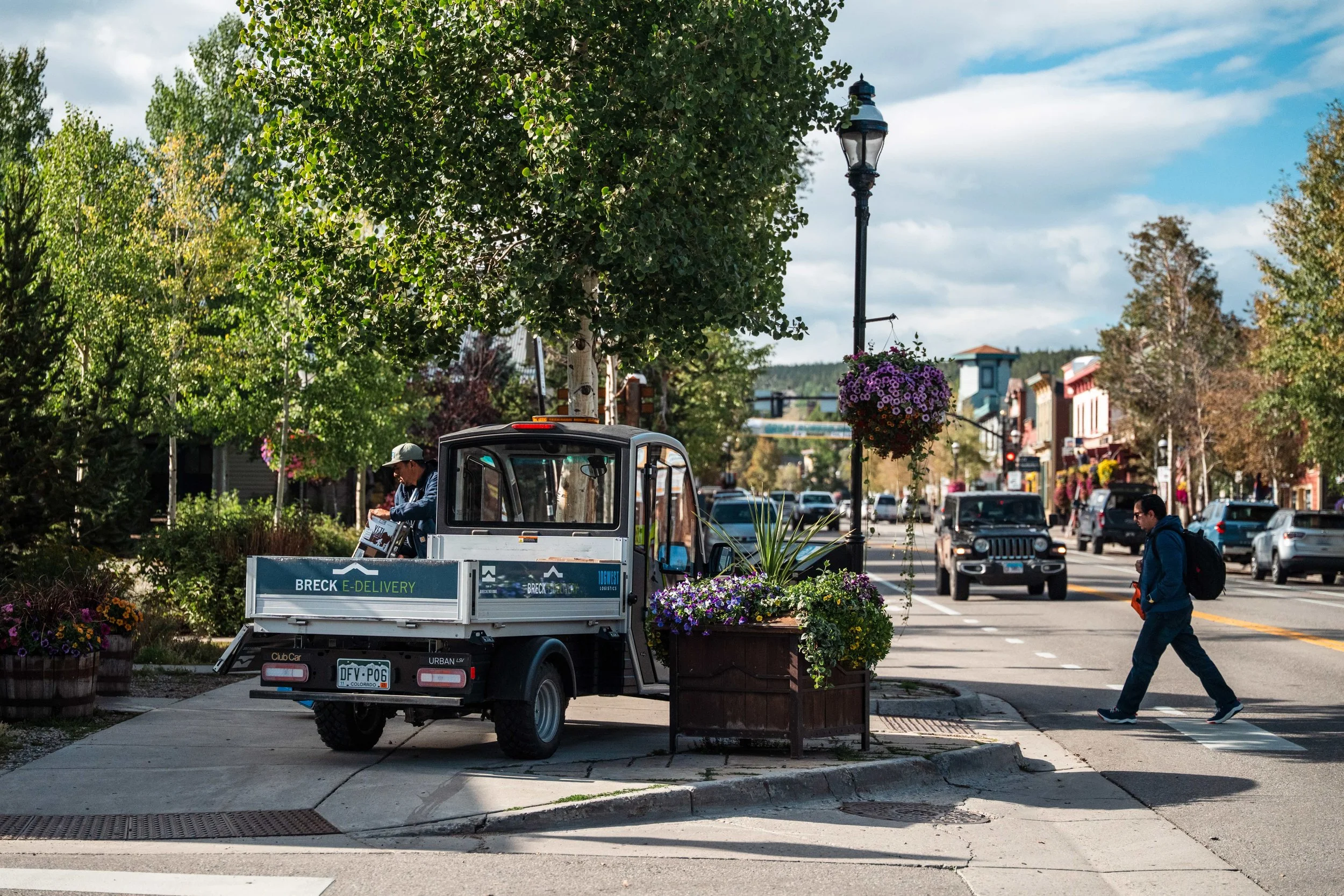
Improve Pedestrian and Curb Safety in Downtowns
Managed delivery operations reduce double parking, loading zone conflicts, and unsafe truck movements in pedestrian heavy commercial districts.
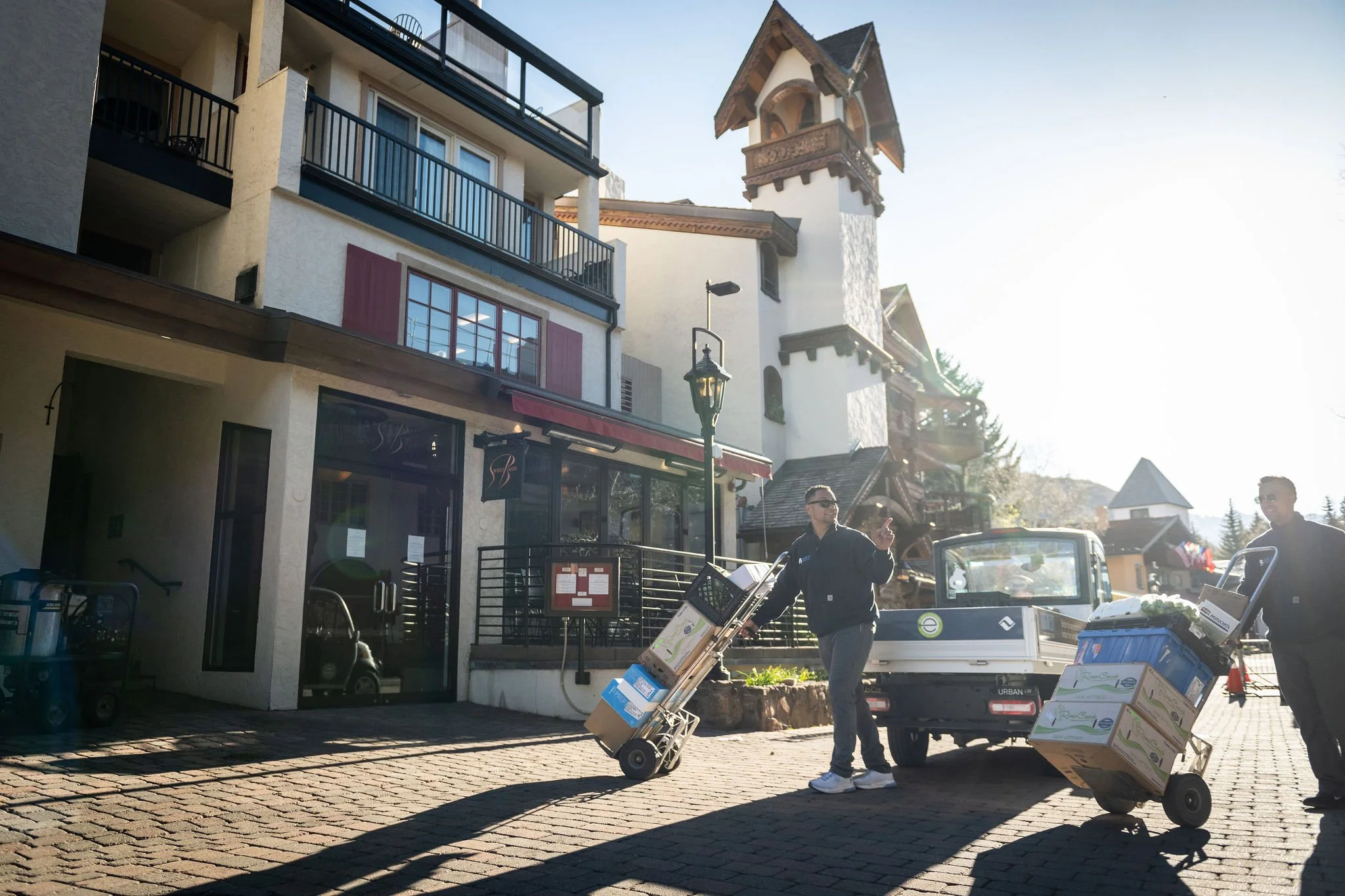
Municipal Last Mile Delivery Coordination
A coordinated, accountable delivery system designed for cities and resort towns. Optimize final mile distribution while improving reliability and operational oversight.

Reduce Downtown Delivery Truck Congestion
Consolidated deliveries mean measurable reductions in truck volume, curb conflicts, and peak season congestion.
These outcomes are delivered through structured municipal last-mile delivery programs designed specifically for dense downtown districts and resort communities.
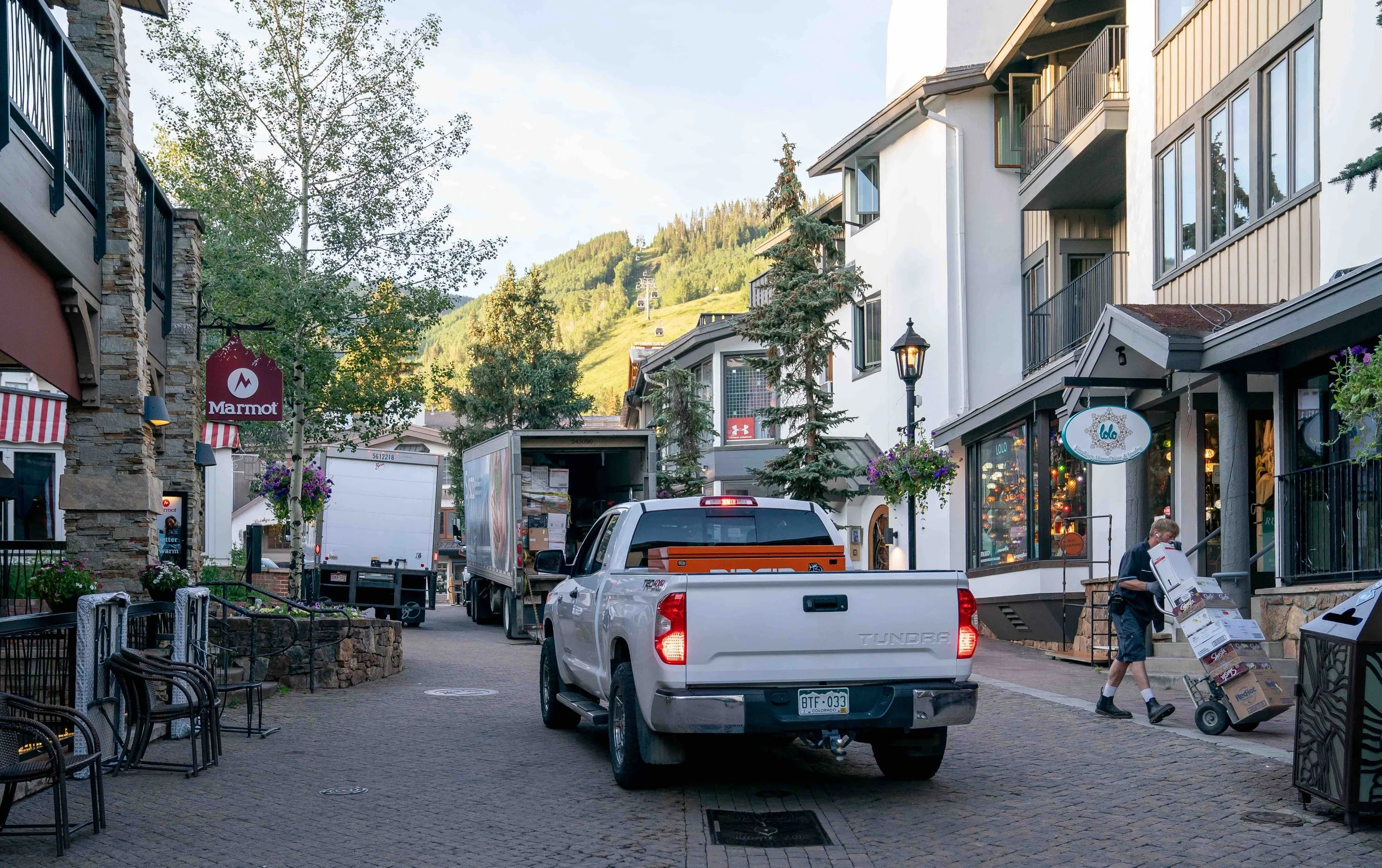
Before...
Delivery truck congestion blocking pedestrian corridors in downtown Vail
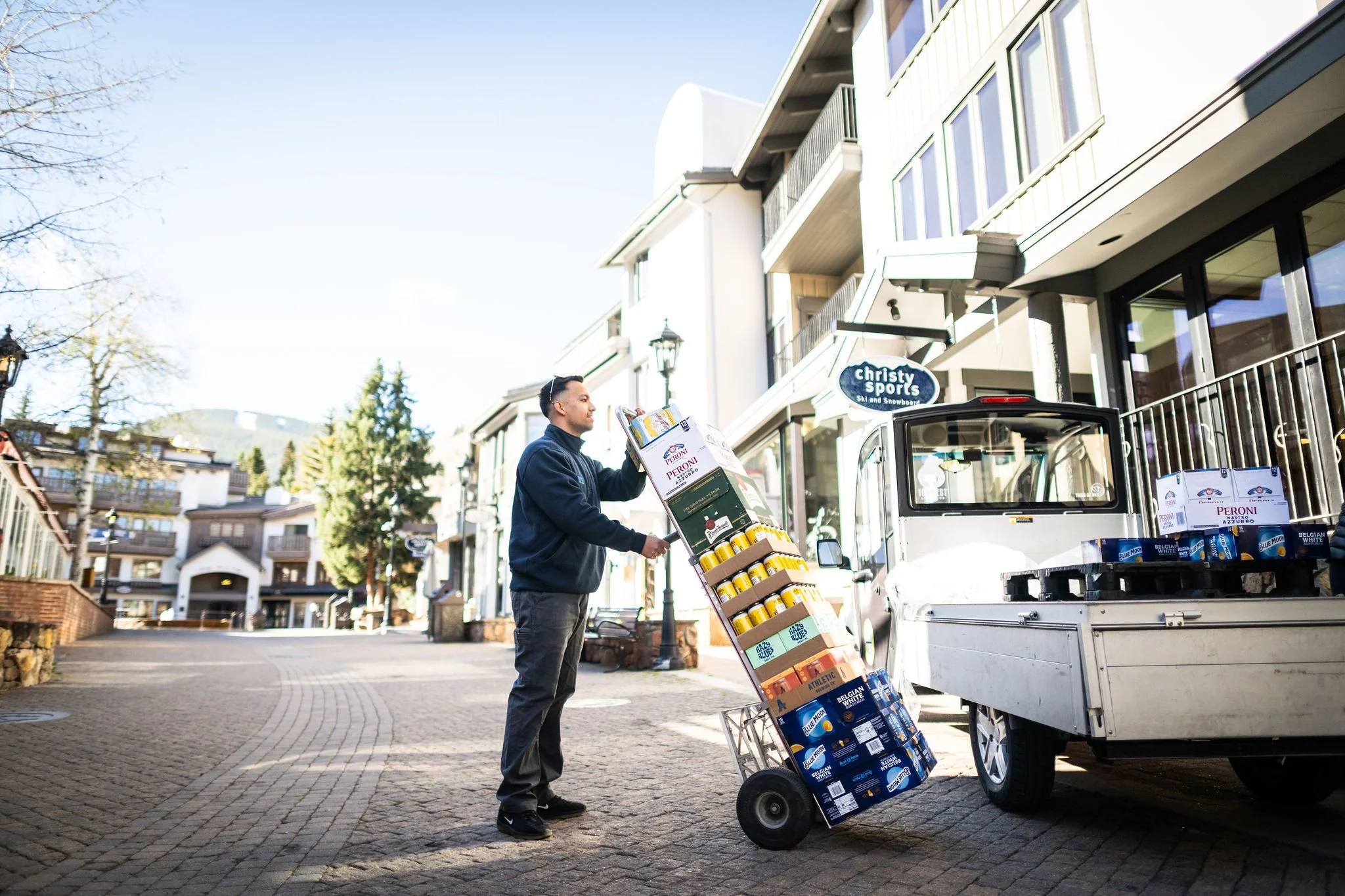
After...
Last-mile delivery coordination reducing truck trips in the same Vail corridor.
How a Municipal Delivery Program Operates
Consolidate delivery trucks at a central facility
Coordinate final mile schedules within a service zone
Deploy small electric vehicles, protect pedestrian space and curb zones
Have you heard this before?
“Our downtown is jammed with delivery trucks.”
“Trucks in front of my business ruin my customer experience.”

“Main Street feels unsafe when I’m biking or walking.”
We provide a fully built, tested, and complete system. You just turn the key.
-
Modify an existing, underutilized building, or we can build a modular cross-dock in a fraction of the time it takes to build a traditional cross-dock. We like to be efficient and will manage the entire project.
-
Our data team will outline a detailed schedule for every delivery truck movement (GHGs), detailing how we will efficiently deliver your food, beverages, and retail products.
-
Our proprietary data analysis will indicate the number of operational units required to implement our services and effectively deliver any volume of product.
-
We can source the best electric vehicles and loading equipment to fit the geographical scope and environment of your community.
-
We pride ourselves on being professional, reliable, and efficient in delivering your products.
Action-based solutions
Our new approach to last-mile delivery is helping communities of all sizes cut congestion, reduce emissions, and keep downtown streets safer for everyone.
-
![Mountain Standard is a proud partner of 106West Logistics.]()
"As the Business Administrator for Sweet Basil and Mountain Standard restaurants, two very busy restaurants with a high volume of business, I check in a lot of the alcohol that comes into our restaurants. The guys are very efficient with their deliveries. They are always on time, have an invoice, and promptly address any issues. I would strongly recommend 106West if you wish to increase the efficiency of delivering products."
Cathy Roach - Business Administrator
-
![Heartstone restaurant is a proud partner of 106West Logistics.]()
"I was excited when 106West services started. The program has made the overall experience for locals and visitors better."
Dick Carleton - Owner & Town Council Member
-
![Mountain Beverage is a proud partner of 106West Logistics.]()
“The program lessened the burden of delivering a high volume of products in a densely populated area.”
Jesse Albertson - Operations Manager
-
![Breakthru Beverage Group is a proud partner of 106West Logistics.]()
“We love how simple, easy, and efficient 106West Logistics make delivering our products."
Ryan Dressen - Delivery Supervisor


Our Trusted Partners


FOOD
Sysco
US Foods
What Chefs Want
Nicholas
Altamira
Seattle Fish Company
Meadow Gold Dairy
…and more.
BEVERAGE
Swire Coca-Cola
Pepsi Co
Breakthru Beverage
Mountain Beverage
Republic National Distributing Co
North Park Transportation
Intermountain Distributing Company
Southern Glazer's Wine and Spirits
…and more.
RETAIL / FREIGHT
LuluLemon
FedEx Freight
SAIA
CCFS (Cross Country Freight Solutions)
Estes
Our Company Vision
We are revolutionizing the world of last-mile delivery. Our commitment to optimizing safety, congestion, and environmental goals aligns us with tomorrow's expectations and shapes a future that operates efficiently and sustainably.

FAQs
What is a municipal last-mile delivery program?
1
A municipal last-mile delivery program is a coordinated delivery management system designed to reduce delivery truck congestion within a defined downtown district. Instead of multiple carriers making overlapping trips into the same commercial core, deliveries are consolidated and distributed through a single accountable operator. This public private model improves efficiency, reduces truck volume, enhances pedestrian and curb safety, and creates measurable outcomes for cities and resort communities.
How can cities reduce delivery truck congestion downtown?
2
Cities can reduce delivery truck congestion by structurally decreasing the number of independent carrier trips entering the downtown core. Curb regulations and enforcement may improve compliance, but they do not reduce truck volume. A managed last-mile delivery program consolidates inbound deliveries and optimizes final-mile distribution, resulting in fewer trucks, safer streets, and more predictable delivery activity in high-density commercial districts.
How does a downtown delivery management program work?
3
A downtown delivery management program operates through a local consolidation facility located near the service area. Commercial deliveries are received, sorted, and routed efficiently into the downtown core using a managed fleet. The program operates within a clearly defined geographic zone and coordinates delivery schedules to reduce redundant trips and loading zone conflicts. Municipal oversight combined with professional logistics management ensures accountability and consistent operational performance.
What results can municipalities expect?
4
Municipalities implementing a managed last-mile delivery system can expect measurable reductions in delivery truck trips within the downtown district. This leads to improved pedestrian safety, reduced curb conflicts, lower emissions, and a more organized commercial environment. Businesses benefit from predictable delivery windows and reduced disruption, while cities experience less enforcement burden and improved delivery truck oversight in dense, walkable areas.
What types of districts are a good fit?
5
Municipal last-mile delivery programs are most effective in visitor-heavy downtowns, resort communities, and bounded commercial districts with high restaurant and retail density. Ideal candidates typically experience documented loading zone conflicts, frequent double parking, pedestrian congestion, and seasonal delivery surges. Defined geographic cores with concentrated business activity allow the program to deliver meaningful reductions in truck volume and measurable operational impact.
Contact Us
Tired of congested streets and delivery headaches? Fill out some info, and we will be in touch shortly. We can’t wait to hear from you!