

The Curb Is the Hidden Bottleneck for Downtown Food and Beverage Deliveries
In walkable downtowns, the biggest operational constraint is often not the roadway. It is the curb. Tight blocks, high foot traffic, limited back-of-house access, and buildings built long before modern receiving needs mean that food and beverage deliveries end up happening in the most public, most crowded space a town has.
“For towns built around a great main street experience, managing food and beverage deliveries is not a nice-to-have. It is a practical step toward safer, smoother, more accessible downtown operations.”
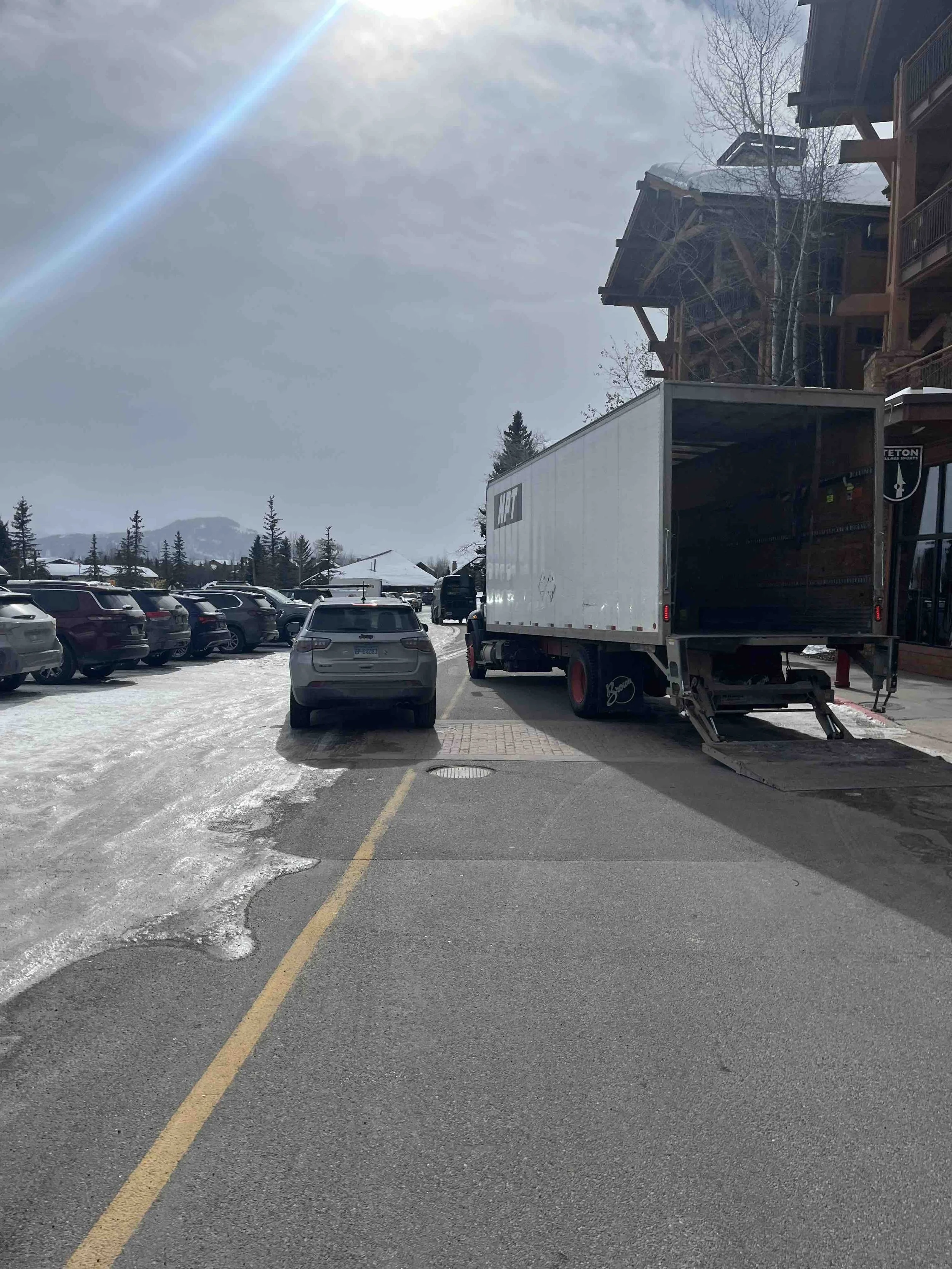
When distributors arrive throughout the day, the curb becomes a contested zone. Trucks circle for a place to stop, unload wherever they can, and linger longer than intended because there is no practical alternative. The results show up quickly. Blocked sightlines at crossings, stress for people walking and biking, delays for drivers trying to move through downtown, and day-to-day friction for merchants whose front doors double as the neighborhood’s loading dock.
What we mean by curb space, curb management, and curb relief
Curb space is the edge-of-street area where vehicles stop for loading, unloading, pickups, drop-offs, and access. You will hear curb management, curb relief, and curb space used interchangeably. In practice, they point to the same idea: organizing how limited street-edge space is used so downtown functions smoothly. Curb space must be managed to ensure accessibility for people and goods, safety for everyone moving through the district, and circulation so the street keeps moving instead of bottlenecking.
A delivery model that works with the street, not against it
A curb-relief program changes the operating system. Instead of sending multiple distributor trucks into the core, inbound food and beverage shipments are received at a nearby cross-dock during a defined window. From there, a single operator delivers into the service area using smaller electric vehicles, with disciplined receiving schedules that reduce surprises and curb conflicts.
This approach simplifies the hardest part of downtown delivery: the final approach, the stop, and the unload. It reduces the need for large trucks to occupy prime curb locations, creates more predictable receiving windows for restaurants, bars, and hotels, and supports street designs that prioritize people without compromising supply reliability.
Results that are easy to track
Success should be measured in operational terms that matter to towns and businesses: fewer large-truck trips into the core, stronger on-time performance, fewer illegal stops at priority hotspots, and consistent monthly reporting so the program can continue to be more efficient and effective.
For towns built around a great main street experience, managing food and beverage deliveries is not a nice-to-have. It is a practical step toward safer, smoother, more accessible downtown operations
